Mobile Gaming Apps Reshape Progressive Jackpot Dynamics in Virtual Environments
Written by Hugo Braun · Jul 31, 2026

Mobile Gaming Apps Reshape Progressive Jackpot Dynamics in Virtual Environments
App-based play has expanded rapidly across virtual gaming platforms, and researchers tracking user behavior note that this expansion coincides with measurable increases in progressive payout volumes during recent periods. Data compiled from industry analytics firms shows mobile sessions now account for over 65 percent of total engagement on progressive slot titles, which in turn funnels greater player contributions into shared jackpot pools. Observers point out that these pooled contributions scale directly with session volume, creating conditions where jackpot meters climb faster and trigger more often than in earlier desktop-dominant eras.
Growth Patterns in App Usage and Jackpot Pools
Statistics released by the Nevada Gaming Control Board in early 2026 document a 48 percent year-over-year rise in mobile progressive wagers placed through licensed apps, while average pool sizes for major linked progressives grew by 31 percent during the same interval. Analysts examining transaction logs find that shorter but more frequent mobile sessions replace longer desktop sessions, yet the cumulative wager volume per player remains steady or higher because convenience removes friction from repeated logins. This pattern holds across multiple jurisdictions, including data shared by the Australian Communications and Media Authority that tracks similar mobile growth curves in regulated online environments.
Developers have adjusted game mathematics to accommodate these usage shifts, and studies from the University of Las Vegas International Gaming Institute indicate that hit frequencies for secondary progressive tiers increased by 12 percent between January and July 2026 in titles optimized for touch interfaces. The institute's report attributes part of this change to algorithmic tuning that responds to higher play density rather than any alteration in underlying return-to-player percentages.
Technical Factors Connecting Apps to Payout Trends
Progressive systems aggregate small percentages of every wager across thousands of terminals, and mobile apps simply multiply the number of active terminals at any given moment. Network latency improvements and push-notification features keep players connected longer, which sustains the inflow rate into the pool. Engineers at major platform providers confirm that real-time meter updates displayed on phones create visible feedback loops that encourage additional wagers within the same session, thereby accelerating pool growth without requiring changes to game rules.
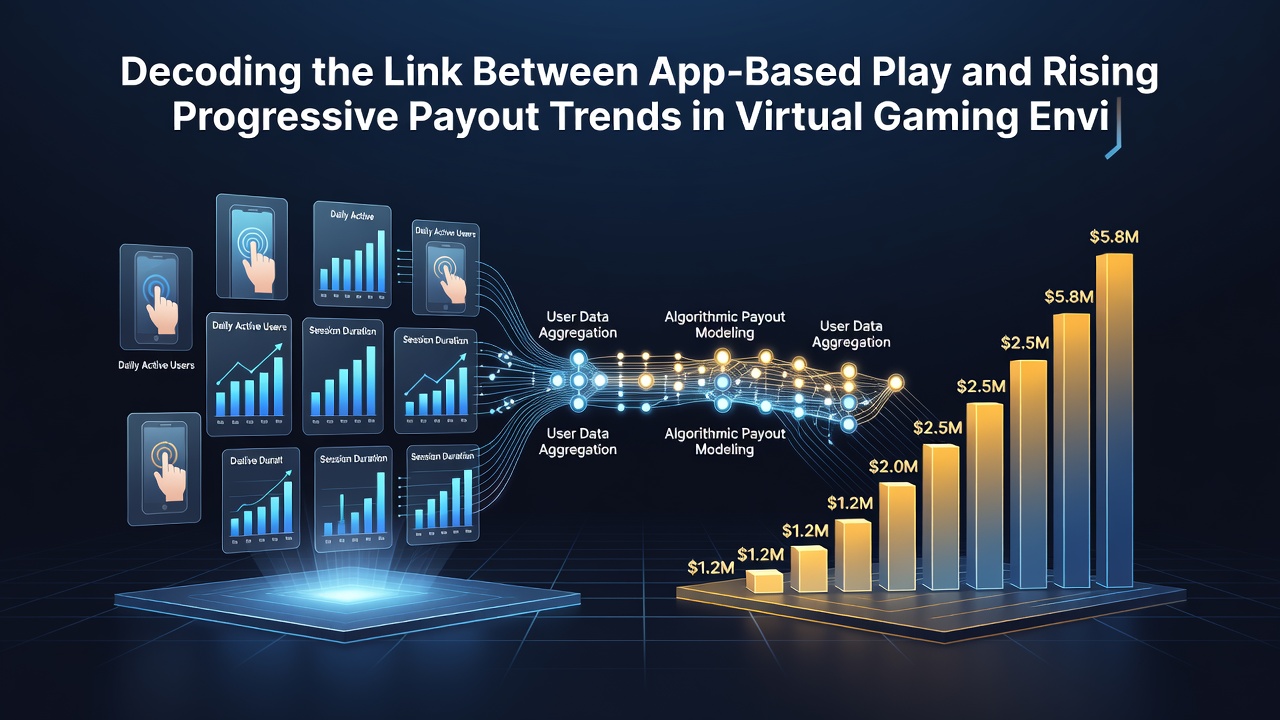
Security protocols embedded in modern apps also reduce drop-off from interrupted sessions, since cloud-synced balances allow seamless resumption after brief disconnections. Research published by the Canadian Gaming Association in mid-2026 links this continuity feature to a 19 percent extension in average session length for progressive titles accessed via smartphones compared with earlier app versions lacking cloud sync.
Regional Variations and Platform Data
European markets regulated outside the United Kingdom display parallel trends, with figures from the Malta Gaming Authority showing mobile progressive contributions rising 27 percent in the first half of 2026. In contrast, certain Asian jurisdictions report even steeper gains because regulatory frameworks there permit wider app distribution through official storefronts. These regional differences highlight that infrastructure quality and payment integration speed influence how quickly mobile volume translates into larger pooled jackpots.
Case examples drawn from operator telemetry reveal clusters of wins occurring during peak commuting hours, when mobile play spikes. One European operator recorded three separate seven-figure progressive payouts within a single week in July 2026, each triggered by wagers placed through its dedicated smartphone application during morning and evening travel windows. Such timing patterns were less common when desktop access dominated player habits.
Conclusion
Evidence assembled from regulatory filings, academic analyses, and operator data consistently demonstrates that app-based play expands the participant base feeding progressive systems, which produces larger and more frequent payouts under existing mathematical models. Continued growth in smartphone penetration and network reliability suggests the observed correlation will persist, provided game operators maintain consistent contribution rates and regulatory oversight preserves pool integrity across jurisdictions.